
Can You Really Trust AI? The Truth About Hallucinations, AI Shopping, and Why Humans Still Matter

If you’ve been online recently, you may have seen videos of AI confidently throwing out information that turns out to be completely made up. Dates, research studies, quotes that don’t exist — all delivered with total certainty. This isn’t a glitch; it has a name: AI hallucination[1]. And no, we’re not being dramatic. AI really does “hallucinate.”
Here’s the uncomfortable reality most people don’t realise:
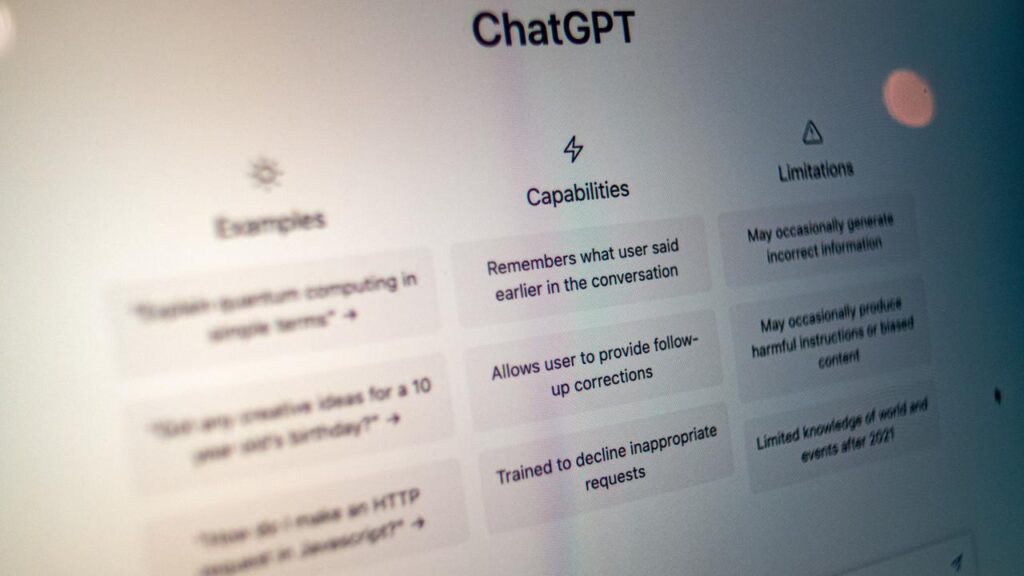
AI doesn’t actually know anything. It doesn’t understand facts, context, truth, nuance, or consequences. Large language models like ChatGPT[2] are designed to predict the next word in a sentence, not to verify whether those words are correct. When the model lacks certain information or finds a gap, it behaves like a student who didn’t read the material but still wants to answer the question — it fills in the blanks with something that sounds right.
A hallucination occurs when AI produces text that is inaccurate, fabricated, or nonsensical but presents it as fact. It might fabricate a research paper, invent a quote, or cite a credible-sounding but nonexistent article. Essentially: AI is trained to be convincing, not correct.
This is why fact-checking AI isn’t optional. It’s essential.
And here’s what most people don’t know:
You can literally ask AI, “Are you stating facts?” or “Show me sources.” If it can’t produce actual, verifiable links or research, that’s your first sign that it may be hallucinating. AI thrives on data — but it also improvises when the data isn’t there.
Now Here’s Where It Gets Wild: AI Isn’t Just Answering Questions Anymore — It’s Selling to You.
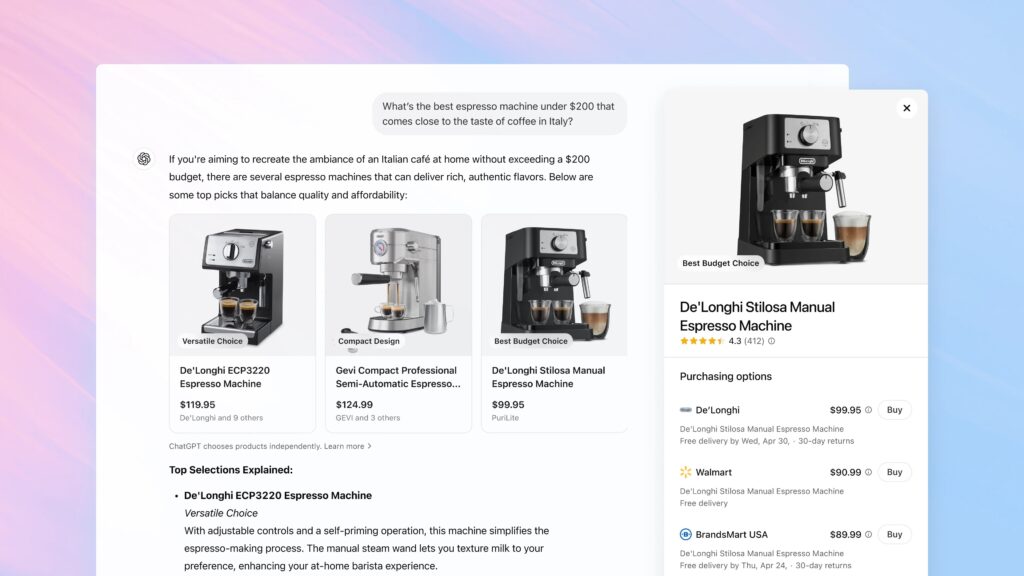
ChatGPT[3] has evolved from a conversation tool into a shopping platform.
With a new feature called Instant Checkout[4], users can now:
- ask a question,
- receive product recommendations,
- and purchase directly inside the chat.
No website visits.
No cart pages.
No endless comparing and scrolling.
Payment happens directly in ChatGPT via Apple Pay, Google Pay, or Stripe.
Etsy merchants are already integrated, Shopify is rolling out next, and any merchant can join by submitting a product feed.
What used to be a multi-step customer journey is collapsing into one sentence.
“What’s the best weekender bag under $200?”
ChatGPT recommends.
You buy — right there in the chat.
The future of commerce is conversational.
For brands, this fundamentally changes visibility.
In the past, being discovered required SEO, paid ads, keyword strategy, blog rankings, retargeting, and social content. Now discovery is controlled by AI assistants, whose decisions are based not on keywords but on structured product data, reviews, and trust signals.
If an AI can’t understand or trust your product data, your product simply won’t appear.
But There’s Another Shift Happening: Ads Are Coming to ChatGPT
OpenAI is already hiring ad platform specialists and building what many experts are calling AI-native advertising[5]. Unlike traditional ads, these placements won’t be banners or pop-ups. They’ll be contextual recommendations, woven into the conversation so subtly they feel organic.
Imagine researching holiday destinations and ChatGPT “suggests” a hotel that happens to be a sponsored placement. It looks helpful, but it’s an advertisement.
This is the same model that built Google’s empire — except now it happens inside a conversation.
AI assistants will:
- recommend products,
- rank brand options,
- reinforce preferences,
- and influence purchasing decisions in real time.
The brands that learn how to speak AI-natively will dominate attention before everyone else even realises what’s happening.
So… can you trust AI?
Yes, but only if you treat it as a tool, not a truth source.
AI is incredible for speed, ideation, research direction, brainstorming, and exploring possibilities. But every AI response should be treated as a starting point, not the final answer. When the stakes involve your business direction, strategy, revenue, or reputation, you need someone who understands nuance — not a model predicting the most statistically likely next sentence.
And that leads to us.
At Cular, we have a simple philosophy: we use AI, but we don’t outsource thinking. We aren’t opposed to AI In fact, we use it fiercely and responsibly. AI helps us save time, accelerate early drafts, explore ideas faster, and analyse large amounts of information. It allows us to work more efficiently so we can focus on what truly matters. But there are decisions that should never be handed over to an algorithm. Business strategy, market positioning, brand narrative, and reputation or crisis management all require human judgement, emotional intelligence, lived experience, and real-world context.
These are the areas where human-to-human insight makes the difference, and where we believe expertise — not automation — should lead.
- AI can produce content.
- AI can recommend products.
- AI can even close the sale.
But AI cannot:
- Understand your business context,
- Challenge your assumptions,
- Feel the pulse of your audience,
- Make judgement calls based on real-world nuance.
In a world where everything is being automated, human-to-human becomes your competitive advantage. Cular exists to bring that back into business.
We use AI to go faster.
We use humans to go deeper.
You deserve thinking partners, not predictive text.
Subscribe to our newsletter for
smart marketing tips, zero fluff, and a dose of digital straight to your inbox.